Mental health is such a crucial aspect of our overall well-being, however various barriers hinder us from seeking the necessary help. Learning from my own experiences with mental health struggles, along with those of my loved ones, I designed this project to combat the stigma associated with mental health by collating all mental health providers on one platform to make access to mental health services more accessible, and to be made aware of the affordable options, along with being able to find providers who fit your preferences.
Common Problem Statements
Seeking mental health resources is often considered taboo, discouraging individuals from exploring therapy options.
Studies involving 144 research projects with over 90,000 participants indicate that stigma remains a significant deterrent to seeking mental health care. The COVID-19 pandemic has exacerbated mental health concerns, with 4 in 10 US adults reporting symptoms of anxiety and depression.
First-time therapy seekers lack sufficient knowledge about the potential benefits of therapy, leading to hesitancy.
Existing therapy applications can be intimidating, relying on clinical questionnaires and self-diagnosis.
Many individuals, especially first-time seekers, struggle to find a starting point for accessing mental health services.
Proposed Solution
Develop an easy-to-use application that normalizes therapy, offering a comprehensive database of mental health providers.
A budget of $500 million is predicted for global spending on mental health applications in 2022.
Provide information on therapy benefits through fast facts and feature real stories of individuals sharing their positive therapy experiences.
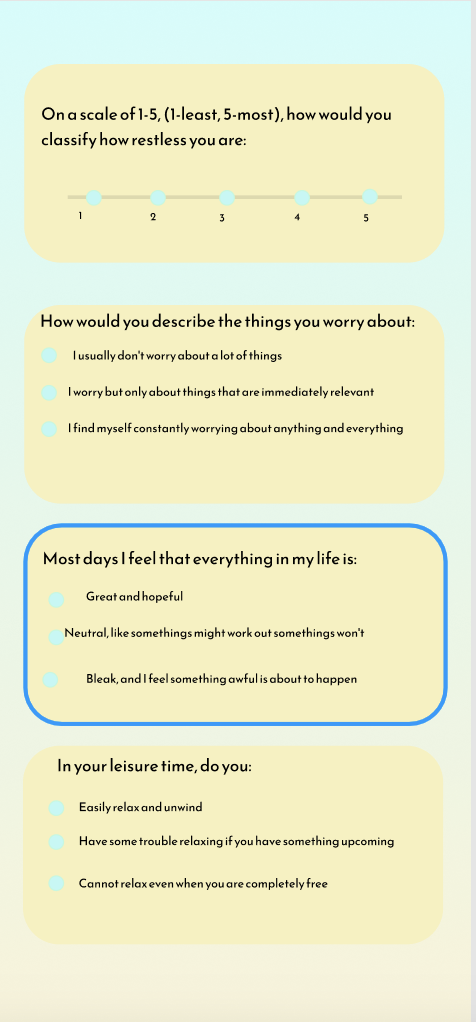
Redesign clinical questionnaires to be more user-friendly, avoiding guiding answers, and reducing the intimidation factor.
Create a platform where therapists and mental health providers can showcase their profiles, including specializations, icebreaker questions, and availability.
Expected outcomes
Reduced Stigma
Normalizing therapy through an accessible application could contribute to breaking down societal barriers.
Increased Awareness
Sharing real stories and therapy benefits will enhance awareness, encouraging more individuals to explore mental health resources.
Improved User Experience
Redesigned questionnaires and user-friendly interfaces will make the therapy-seeking process less intimidating.
Enhanced Reachability
A comprehensive database of mental health providers with detailed profiles will facilitate easier matching between clients and therapists.
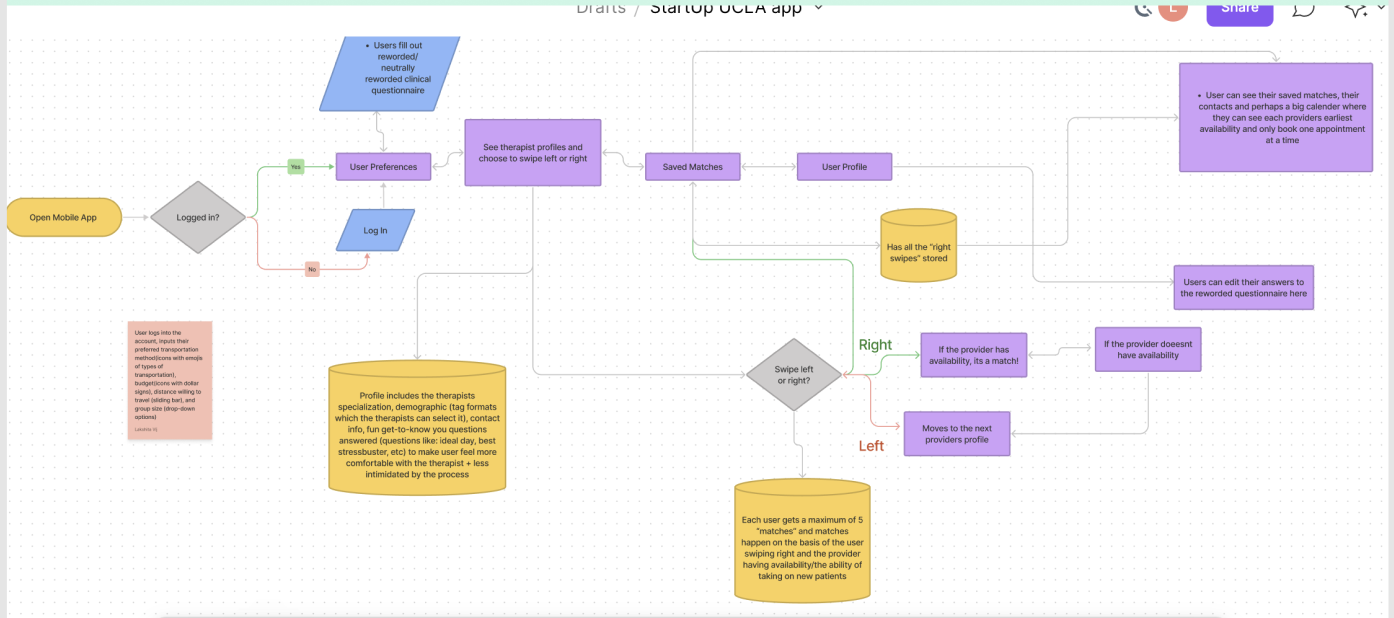
Proposed User Flow
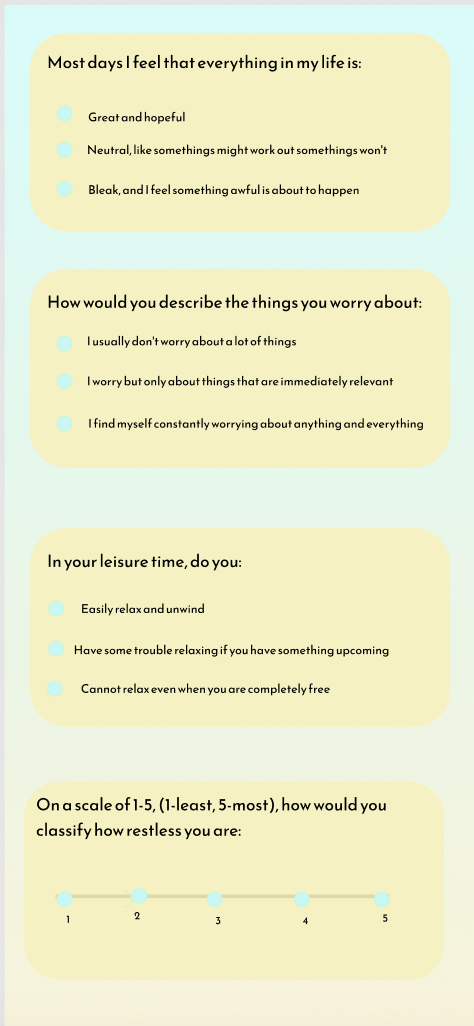
Sample reworded anxiety and depression diagnostic questionnaires